
AI
Using AI in discovery without losing the evidence
AI can help organise discovery material, but every requirement still needs a clear route back to the evidence behind it.
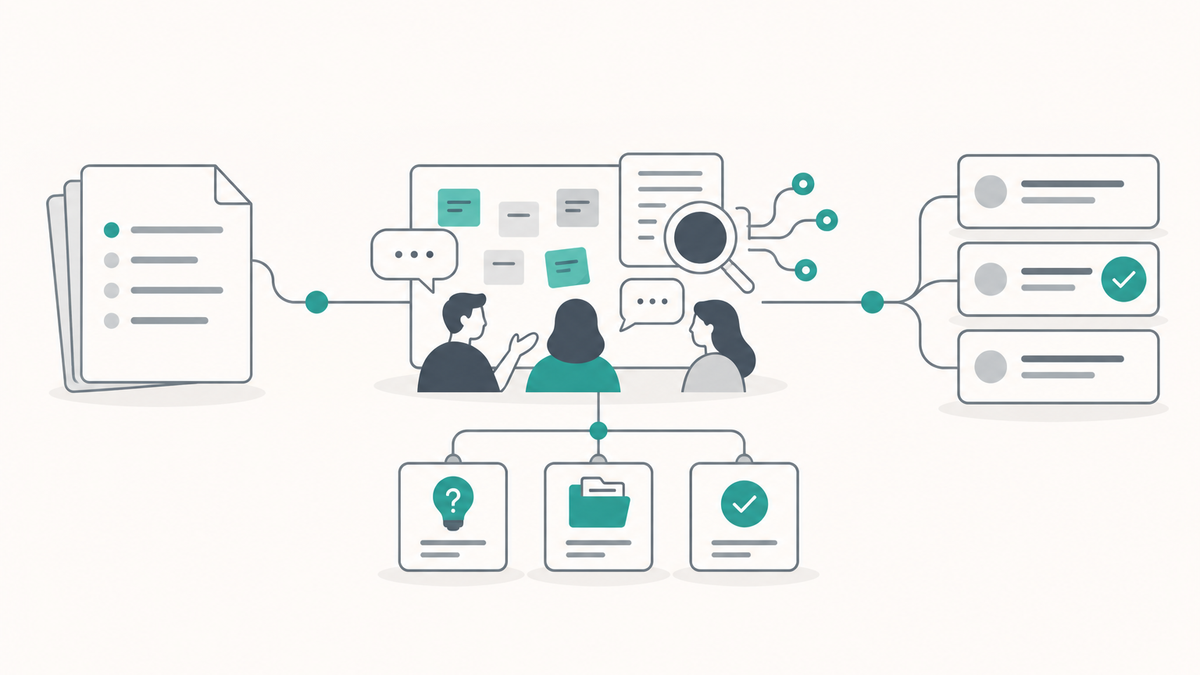
The project started with a list of CRM requirements.
It gave us a useful starting point: what the organisation wanted to achieve, where the current systems were causing problems and what a future solution might need to support. The next task was to work through those requirements with the people who would use the system and establish what each one meant in practice.
We organised discovery sessions around the processes behind the list. Related requirements came together, alongside the documents and information already available. Each session had a clear purpose: validate what we understood, explore the gaps and make the decisions needed to move forward.
AI helped with that preparation. I used it to organise the source material, map evidence to requirements and identify questions that still needed answering. That gave us a more focused starting point for each conversation.
As the sessions progressed, the requirements began to change. Some became clearer. Others needed to be split into separate needs, discussions exposed exceptions, dependencies and differences between how a process worked today and how people wanted it to work in future.
Much of the work happened after each session.
I used AI to help interpret the transcript alongside the session board and the existing requirements. It helped identify decisions that needed recording, assumptions that had been challenged, documents that had been mentioned and questions that remained open.
Those findings then fed into the internal registers. A statement we were relying on without confirmation became an assumption to validate. An agreed direction went into the decision log. A spreadsheet, contract example or process document became an asset to track and review. An unresolved question became an action with someone responsible for answering it.
Keeping these records connected mattered. A requirement could depend on an assumption, a decision could change its scope, an asset could provide evidence that resolved a question raised several sessions earlier. AI helped make those connections easier to find and keep up to date.
The review still needed human judgement. A transcript can capture someone describing a workaround, suggesting an option or agreeing a future approach in very similar language. I needed to check the interpretation against the discussion before treating it as a decision or changing a requirement.
The session boards also needed discipline. We kept the important clarifications, decisions and outstanding questions visible, with the supporting detail held in the registers. That made the boards more useful for the next conversation and reduced duplication.
We are now using that accumulated evidence to work through requirement confirmation and prepare for sign-off. Stakeholders have a clearer basis for reviewing what is included, what has changed and what still needs resolving.
That creates a stronger foundation for user stories. An agreed requirement gives us the outcome; the discovery work supplies the detail about who needs it, how the process should work, which rules apply and what acceptance criteria will demonstrate success. Some design questions may still need further refinement before a story is build-ready, but we've already got most of the way there.
Throughout this work, transcripts and supporting documents also need an agreed approach to confidentiality and AI processing. Anonymisation helps, alongside clear decisions about access, processing and retention.
AI’s contribution has been in helping us carry the detail through that journey: from the original list, through the conversations and into the records that support sign-off and delivery. It has made the evidence easier to organise and revisit, while the people involved remain responsible for confirming what the requirements should become.
Written by
Michael Skinner
Michael helps charities choose, connect and improve the technology they rely on, with particular experience across CRM, integrations, Salesforce and practical AI.